Mary Kept the Books
Four words for her, eleven paragraphs for the men — and what her own hometown newspaper knew that her family’s historian did not.

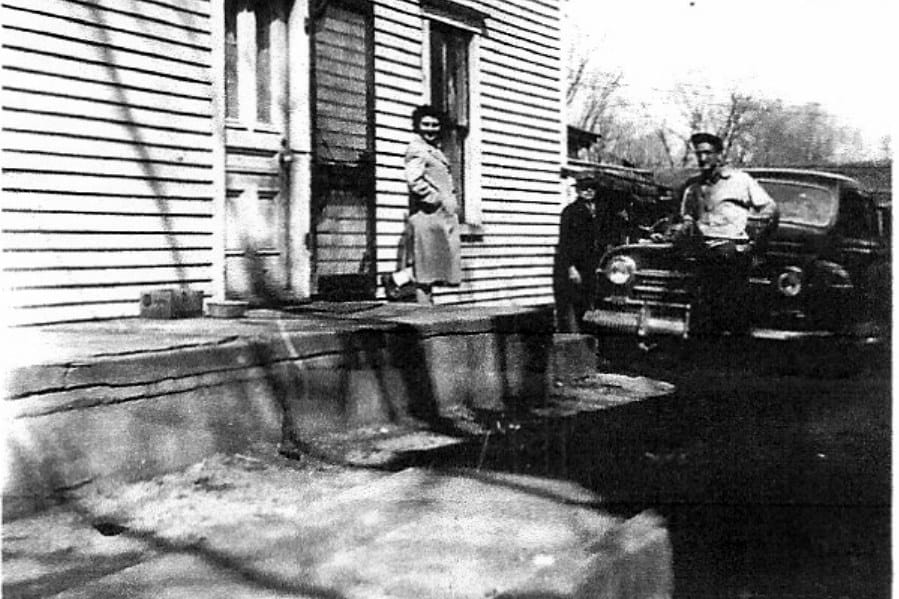
Four days ago this blog published a long piece about three generations of Collvers in the telephone trade — a mail carrier who owned a losing rural exchange at Munger, his son who bought a failing one at Climax and rebuilt it after an ice storm, and his grandson who carried it into the age of the internet. It ran to two thousand words. Somewhere in the middle of it, in a paragraph about the conversion to dial service, was this sentence:
Mary kept the books. John climbed the poles.
Four words for her. Eleven paragraphs for the men.
It was not wrong, exactly, in the way a date is wrong. Mary did keep the books. But a sentence can be accurate and still be a failure of proportion, and this one was. I had written it from the sources I had, which were newspaper stories about a telephone company — and newspaper stories about telephone companies in the middle of the last century are written about the man whose name is on the letterhead. Then I went looking for something else entirely, found the Climax Crescent of the fifth of April, 1996, and discovered that her own hometown paper had done considerably better by her than her own family’s historian.
They gave her the front page. The headline had no ornament on it at all:
Mary Collver Was Integral Part In Growth Of Climax Telephone Company
What she actually did
She was born Mary Rebecca Houghtaling at Reese, Michigan, on the twenty-sixth of August, 1915, a daughter of Will Vernon and Pearl (Hurst) Houghtaling. She married John W. Collver on the sixteenth of June, 1939, and went with him to East Tawas, where he kept the switchboards talking at the air base through the war.
In January of 1949 the two of them bought the Climax Citizens Telephone Company. The Battle Creek Enquirer announced it that month in a form I passed over the first time I read it: “Mr. and Mrs. John Collver, of East Tawas, have purchased…” Both names. The paper of record understood the arrangement in 1949 rather better than I did in 2026.
What the arrangement meant, in practice, was this. For the first six years the company had no premises. The switchboard stood in the front room of the Collvers’ own house, which is to say that Mary did not go to work at the telephone company; the telephone company lived with Mary. It ran around the clock. When the young operator, Esther Roe, needed relief, Mary took the board — and when the Collvers had to be away, Esther minded the board and the children together. There is no clean line in an arrangement like that between the business and the household, and the person who holds both together does not usually get a paragraph.
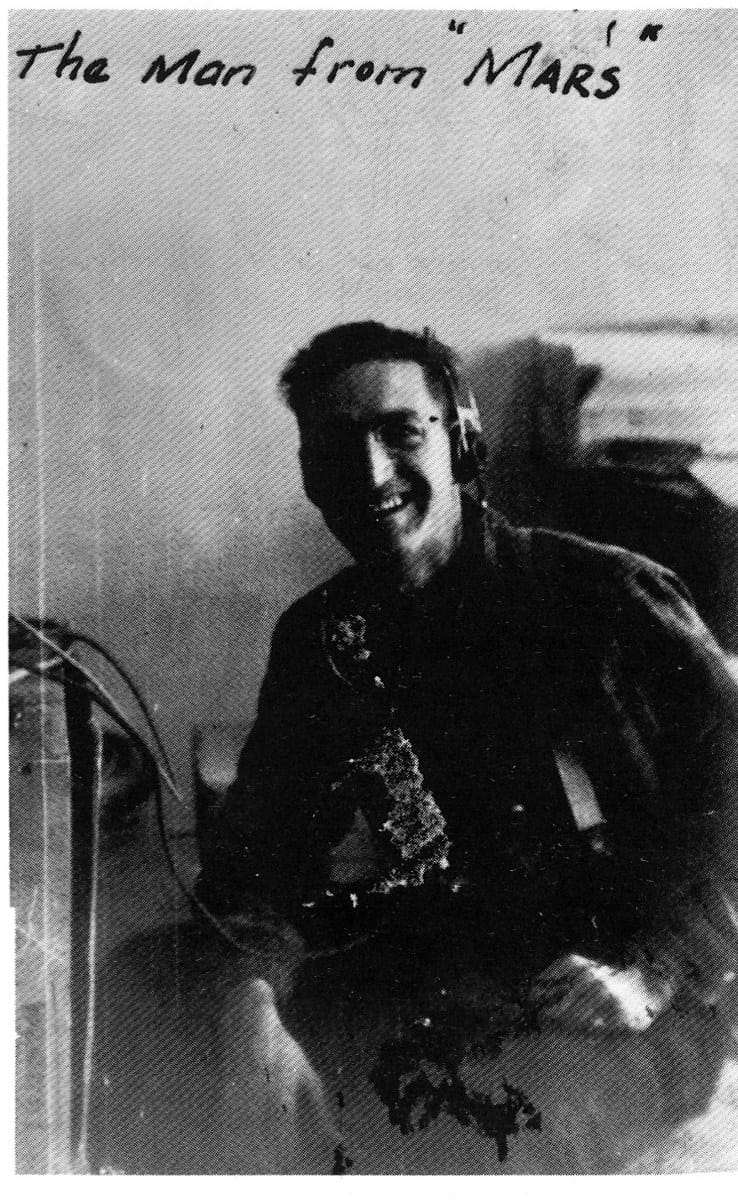
She was the company’s secretary and treasurer, and she held those offices for the better part of thirty years. The books, the billing, the correspondence, the business affairs. She went to the meetings and the conventions around the state where the independent companies argued their case against the Bell system, and she belonged to the Telephone Association of Michigan in her own right, as her husband did — the same association that, when he died, made him a lifetime honorary member.
And there is one more thing, which is the detail that turned this from a correction into a post. The great decision of the company’s middle years was whether to give up the old magneto switchboard — crank the handle, ask the operator — for an automatic dial system. It was expensive, it very nearly did not happen, and it is the hinge of the whole enterprise: the local banks refused the loan, and the equipment maker’s finance man had to come out from Rochester and shake hands at the kitchen table.
According to her son, it was Mary who pressed for it.
So the sentence I published might more accurately have read: Mary kept the books, and the board, and the house the board sat in, and she is the reason the town got dial service. That is longer, and worse as a sentence, and it has the advantage of being what happened.
Why she was easy to miss
I want to be exact about how this went wrong, because the mechanism is general and this blog is supposed to be about method.
Every contemporary source I used was a business story. The 1937 rate case names the owner. The 1949 purchase notice names the purchaser and, in the body, his boyhood at his father’s board. The 1974 profiles are about the company. Business coverage names officers, and in that generation the officer whose name reached the headline was the husband — even, as here, when the wife was literally an officer of the corporation. Follow only that trail and you will write the story I wrote.
The sources that see her are the other kind: the obituary, and the small-town weekly’s habit of writing a life rather than a career. It was the Crescent — Bruce Rolfe, who has been keeping that town’s memory for thirty years — who put “integral part in the growth” into a headline, and the “Area Death” column two pages later that recorded the choir, the United Methodist Women, the Bear Creek Farm Bureau, the Cooperative Extension, the Women’s Study Club and the Telephone Association of Michigan, all in one dense paragraph.
This is worth generalizing, because your family has the same gap. The records that describe work name men; the records that describe lives name everyone. If you are reconstructing a family business from newspapers, deeds and licenses, you are reading a class of source built to record the person who signed. The wives, and often the daughters, are in the obituaries, the church minutes, the club notices and the columns nobody indexes. The absence of a name from a business record is not evidence of absence from the business — this project has a rule about that, and I failed to apply it to my own great-uncle’s wife.
The last date
John Collver died on the twenty-sixth of August, 1990 — which was Mary’s seventy-fifth birthday.
She lived another five and a half years. She took meningitis while in Florida in February of 1996, spent two weeks in hospital and ten days in a nursing home at Galesburg, came home to Climax for about a week, was taken back with pneumonia on the twenty-ninth of March, and died the following evening, a Saturday. The funeral was at the Climax United Methodist Church, where she had sung, on the fourth of April. The front page came out the next day.
The sentence in “Doves on the Wire” has been corrected, and the audio re-recorded to match. The correction is noted here rather than made quietly, which is the standing practice of this project and the only practice that deserves any trust.
Go and look at the sentence you have written about your own grandmother. Count the words. Then go and find her obituary, which will be short, and badly typeset, and will tell you the half of the story your good sources left out.
Sources: “Mary Collver Was Integral Part In Growth Of Climax Telephone Company,” by Bruce Rolfe, and “Area Death: Mary Rebecca Collver,” both Climax Crescent, 5 April 1996; “Climax Phone Line Changes Ownership,” Battle Creek Enquirer, 13 January 1949; John W. Collver’s “Climax Telephone Subscribers” notice, Climax Crescent, 14 January 1949; “Climax Telephone Company … New Dial System 50 Years Ago,” by Bruce Rolfe, Climax Crescent, 13 February 2004; John W. Collver obituary, Climax Crescent, 31 August 1990. Photographs courtesy of Gilbert Collver. Family recollection from the Climax branch, gratefully received.
Adapted from research for the forthcoming book — We Are Doves: Four Centuries of the Collver–Culver Family.
© 2026 Albert B. Collver III · The Collver Family History Project. Original historical documents reproduced here are in the public domain; the research, text, and annotations are the author’s. Please cite or link rather than republish.