The Two Colonies
There is a small lake in Mount Arlington, New Jersey, that the modern map calls Lake Rogerene.
Almost nobody who drives past it could tell you what a Rogerene was. The name sits on the water the way a fossil sits in limestone — the last hard part of something that was once alive, once moving, and once in a great deal of trouble with the authorities. The something was a Connecticut dissenting sect, and the reason I care is that my family filled one of its two New Jersey colonies so completely that the neighbors stopped using the sect's name altogether and coined a word from ours instead.
Two colonies. That number is the subject of this post, because nearly every book that has ever touched my family gets it wrong — and the error has quietly corrupted a century of family history, ours included.
The received story
The family's printed literature tells the New Jersey migration as a single crossing. Hinman, in 1852, has the patriarch John Culver, "his wife and ten children with their families, being twenty-one in all," settling on Schooley's Mountain in 1734. Rosenberger, in 1922, keeps the count and the year. The sect's own historians say about 1735. And Chambers, the historian of the New Jersey Germans, pushes the whole company back to 1732. One migration, twenty-one souls, one motion — the patriarch gathers his household like Abraham and goes down into New Jersey.
Set the accounts side by side and the seams show. The count, where a count is given at all, is always twenty-one; the year wanders across four calendars; and the arithmetic never quite closes, because one of the ten children the patriarch supposedly brought was already dead in New Jersey before the colony arrived.
That last fact deserves its own paragraph, because it is the key to the whole chronology.
The colony's first record is a dying man's will
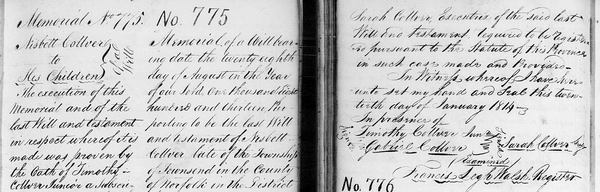
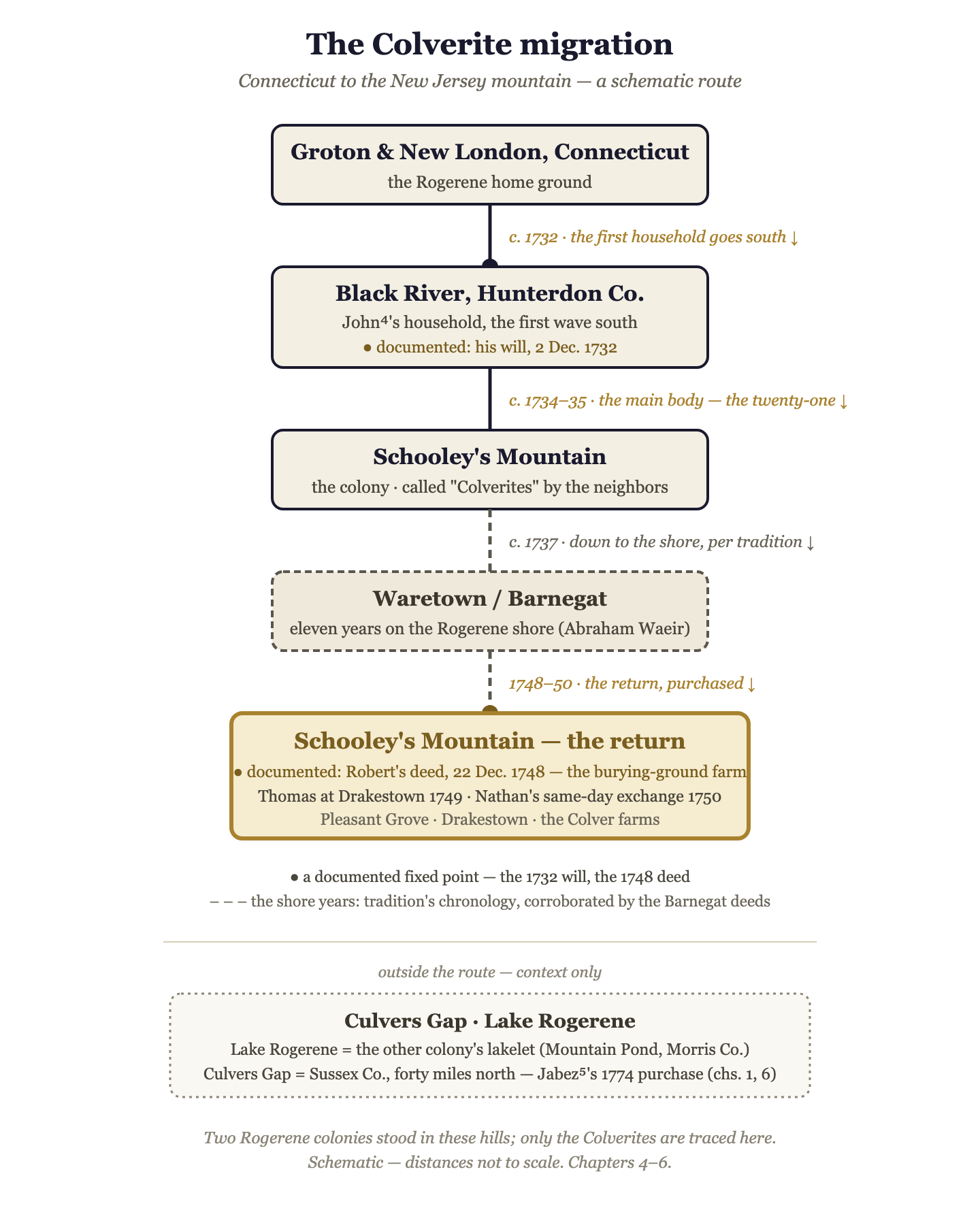
On the second of December, 1732, at a settlement called Black River in the hills of northwestern New Jersey, a shoemaker not much past thirty lay down to put his affairs in order. The printed calendar of New Jersey's colonial wills preserves the abstract: "Colver (Colwer), John, of the Blackriver, Hunterdon Co., 'cordwinder, being sick.'" A cordwainer — the clerk spelled it "cordwinder" — was a worker in fine leather, a shoemaker as distinct from a cobbler who only mends. The will names his wife Freelove, an eldest son John, a toddler the scribe rendered "Jabsh" — my ancestor Rev. Jabez Collver, then seventeen months old — and a third child not yet born. The inventory of his goods came to £95 11s., "including beaver hat, felt hat and Bible."
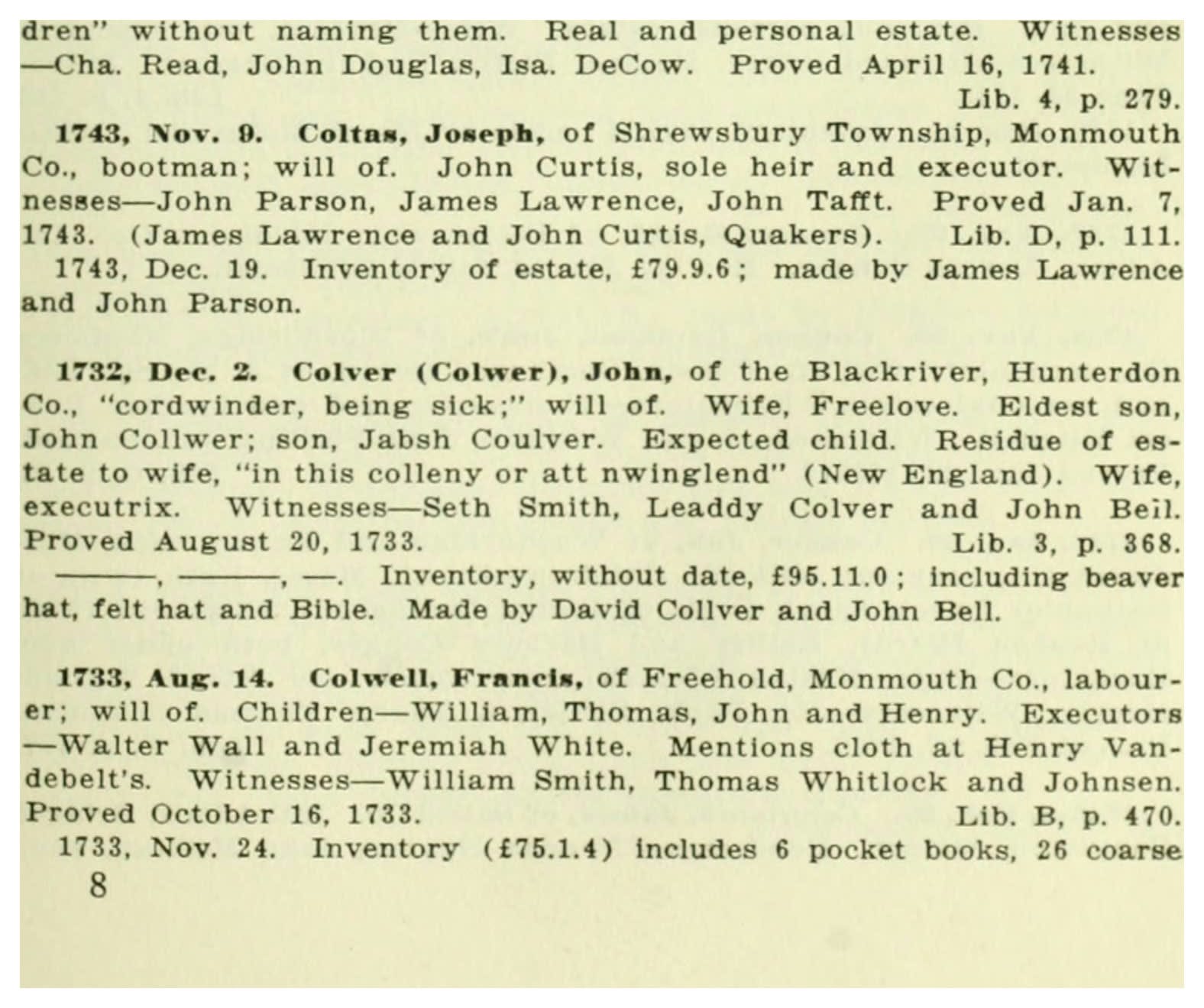
The will was proved in August of 1733. The standard accounts date the colony to 1734 or 1735. Which means the first record of the Rogerene colony at Schooley's Mountain is a dying man's will, written before the colony is supposed to have existed.
The documents, read in order, suggest what actually happened: not an exodus but waves. John⁴ took his young household south first — whether as a deliberate advance settler or simply first, for reasons now lost. Then, in 1734 or 1735, the main body came: old John³ in his middle sixties, Sarah his wife — the singing sister of Fifteen Stripes, who told the New London court it was an adulterous generation — the remaining sons and daughters, and the allied Groton households of the sect. The compilers compressed the waves into one crossing. The probate record keeps the true time.
And one clause of that will holds the whole hinge of the migration in a single sentence of bad spelling. The dying man left his estate to his wife "in this colleny or att nwinglend" — in this colony or at New England. In December of 1732, New England was still a live destination for a Rogerene widow. It proved to be exactly that: Freelove took her boys home to Connecticut, and Jabez was raised in Groton among his mother's people, choosing his uncle Isaac Lamb as guardian before the New London court in 1747. The family the compilers moved south in one sentence stayed attached to both colonies at once for two decades — precisely as the will had allowed for.
Two colonies, not one
Now the correction the post is named for.
What the twenty-one came to was not empty country, and it was not the first Rogerene settlement in those hills. The county historian of Morris — Henry C. Pitney, compiling in 1914 from local recollection — is the source that draws the line, and on his account there were two Rogerene communities in northwestern New Jersey, and they were distinct.
The one he describes as larger and earlier sat by "the pretty lakelet, locally known as Mountain Pond," near Lake Hopatcong — forty or more families out of the New London country. Pitney repeats a tradition that trappers and surveyors of 1709–15 "found the Rogerenes already established… large fields of grain and orchards of productive apple trees," which, if the recollection is reliable, would put the first flight from Connecticut around the turn of the century, in the very years the New London whippings were at their worst. That early dating rests on tradition and I flag it accordingly; but the community itself is solid, and its lakelet is the one that still answers to the sect's name. Mountain Pond is Lake Rogerene.
The second, smaller company settled on the eastern slope of Schooley's Mountain about 1734, and of it Pitney writes the sentence from which my chapter five takes its title: it was "composed chiefly of the Colver family and the families with which it had intermarried — the Lambs, Tuttles, Burrows, Salmons, Manns and Owens — and were usually called Colverites by other settlers."
Colverites. The neighbors needed a word for the strange, Sabbath-less, oath-refusing clan on the mountainside, and the word they reached for was not the sect's name but the family's. Neighbors name what they can see, and what the neighbors of Schooley's Mountain could see was Colvers.
And then Pitney adds, flatly: "But the Mountain Pond Rogerenes had no direct association with the Colverites."
Two communities of one persecuted sect, out of one Connecticut county, within a few miles of each other in the same New Jersey hills — and no direct association. The county historian offers no explanation, and honest genealogy resists the temptation to invent one; the sect was locally organized and had no central governing body, and two independent flights from New London needed no common government.
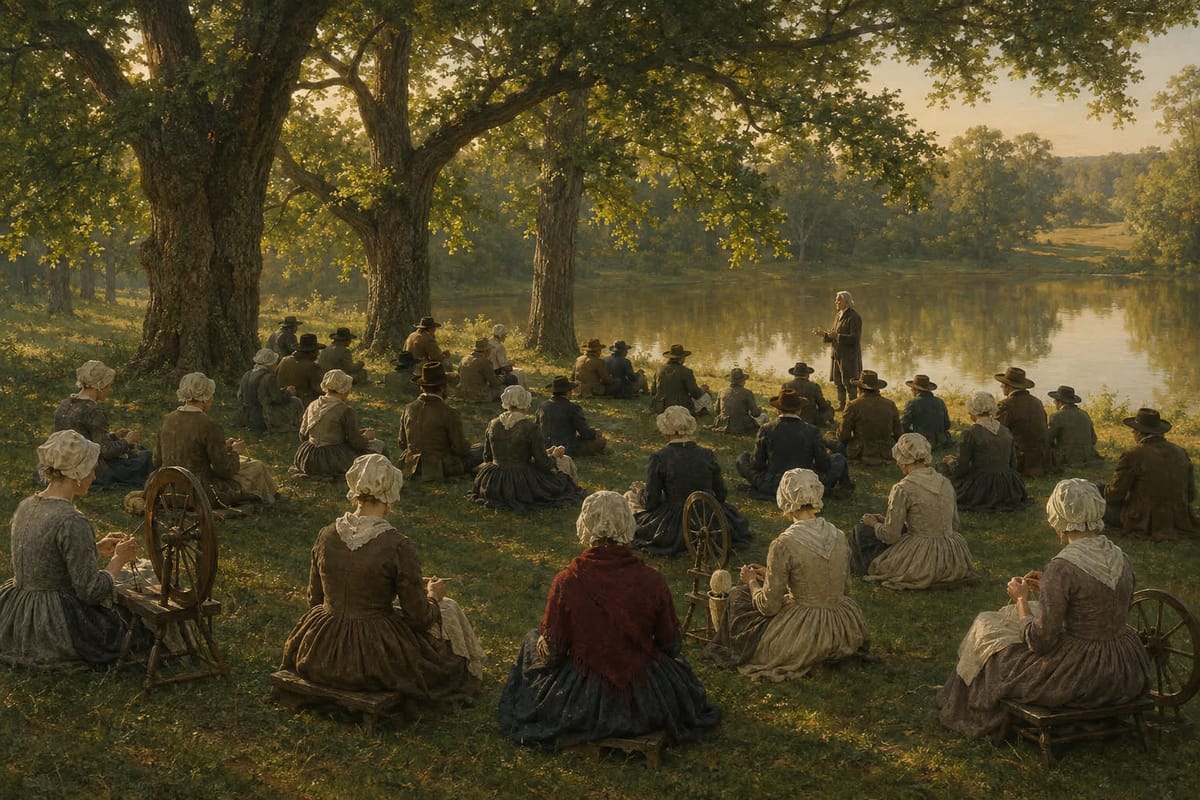
But the correction matters for a plain documentary reason. Several of the best-known scenes the older books attach to "the Rogerenes of Schooley's Mountain" — the log meeting-house, the early dates, the grove worship — Pitney explicitly assigns to Mountain Pond. Later writers transferred that material to the Colverites without knowing there were two colonies to confuse. The loveliest scene in the whole tradition — the temple in the grove: a grassy slope under old oaks beside the water, the women bringing low stools and sometimes spinning wheels, the men seated on the turf with their hats on, the hands turning to knitting and basket-making through the preaching — is Pitney's description, from the recollections of neighbors, of the Mountain Pond community. Perhaps the Colverites worshipped the same way; two companies of one sect may well have shared their practices, and the transfer may be fair inference rather than theft. But the reader deserves the provenance, and now has it. When a family's literature and a sect's literature share a filing cabinet for two hundred years, the furniture migrates.
Eleven years by the sea
The Colverites did not stay put, and this is the part of the story where recollection and parchment shake hands — which happens rarely enough in this project that I want you to watch it happen.
Pitney says the company stayed about three years, "removed to Monmouth county, where they remained eleven years, and then returned" to the mountain. His arithmetic gives a departure about 1737 and a return about 1748. A single county historian working from neighbors' memories is a thin reed; but the sect's own historians, drawing on their own sources, have the company at the shore and back "about eleven years later," and Wood and Jacobus — the great correctors of this family's genealogy, working from deeds and probate rather than recollection — give the whole circuit in one sentence: three years at Schooley's Mountain, a move "in a body to Barnegat," a return after about eleven years. Three witnesses, one shape.
And then there is the land, which does not remember anything and therefore cannot misremember it. The register of New Jersey's colonial conveyances carries a row of Colver deeds along the Barnegat shore in exactly those years: a Robert Colver buying at Barnegat in December 1739; Colver land selling out of Barnegat from April 1748; and on the twenty-second of December, 1748, "Robert Collver of the County of Monmouth" — still styled a shoreman — paying William Cooke one hundred and eighty pounds proclamation money (coin valued by royal proclamation, the stable currency of large transactions) for a plantation of 265¼ acres on the mountain, "Together with all the Houses out houses Stables & Barns Orchards Meadow Ground." The receipt was endorsed the same day. Paid in full, in one afternoon, by a man whose county of residence records the detour and whose purchase records the return.
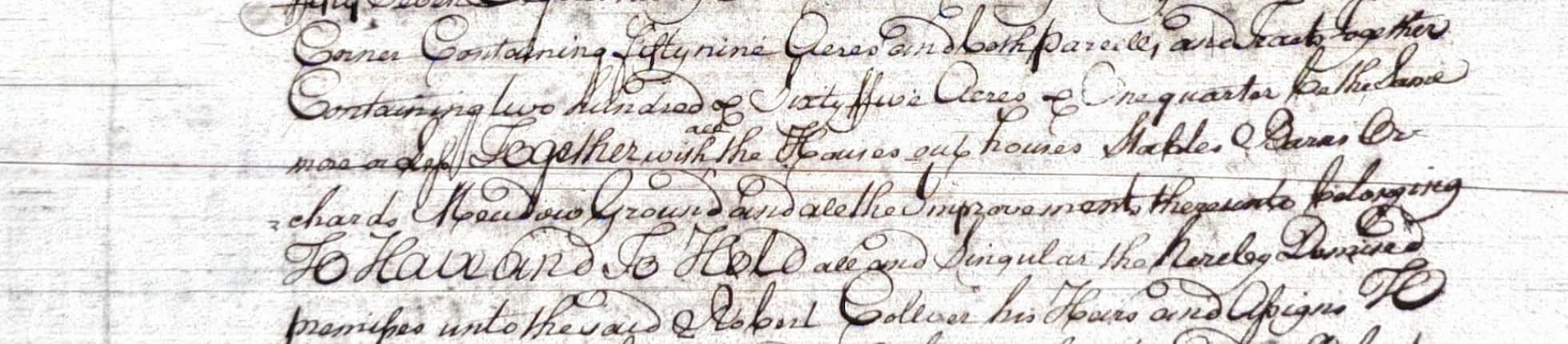
Two years later a Nathan Collver "of Barnagot" closed the circle with a flourish I have come to admire: on the fourth of September, 1750, he bought 185 acres a mile south of William Schooley's — and on the very same day sold his Barnegat land to the man he was buying from and a partner. Not a purchase but an exchange; the eleven-year detour closed out in one afternoon's paperwork.
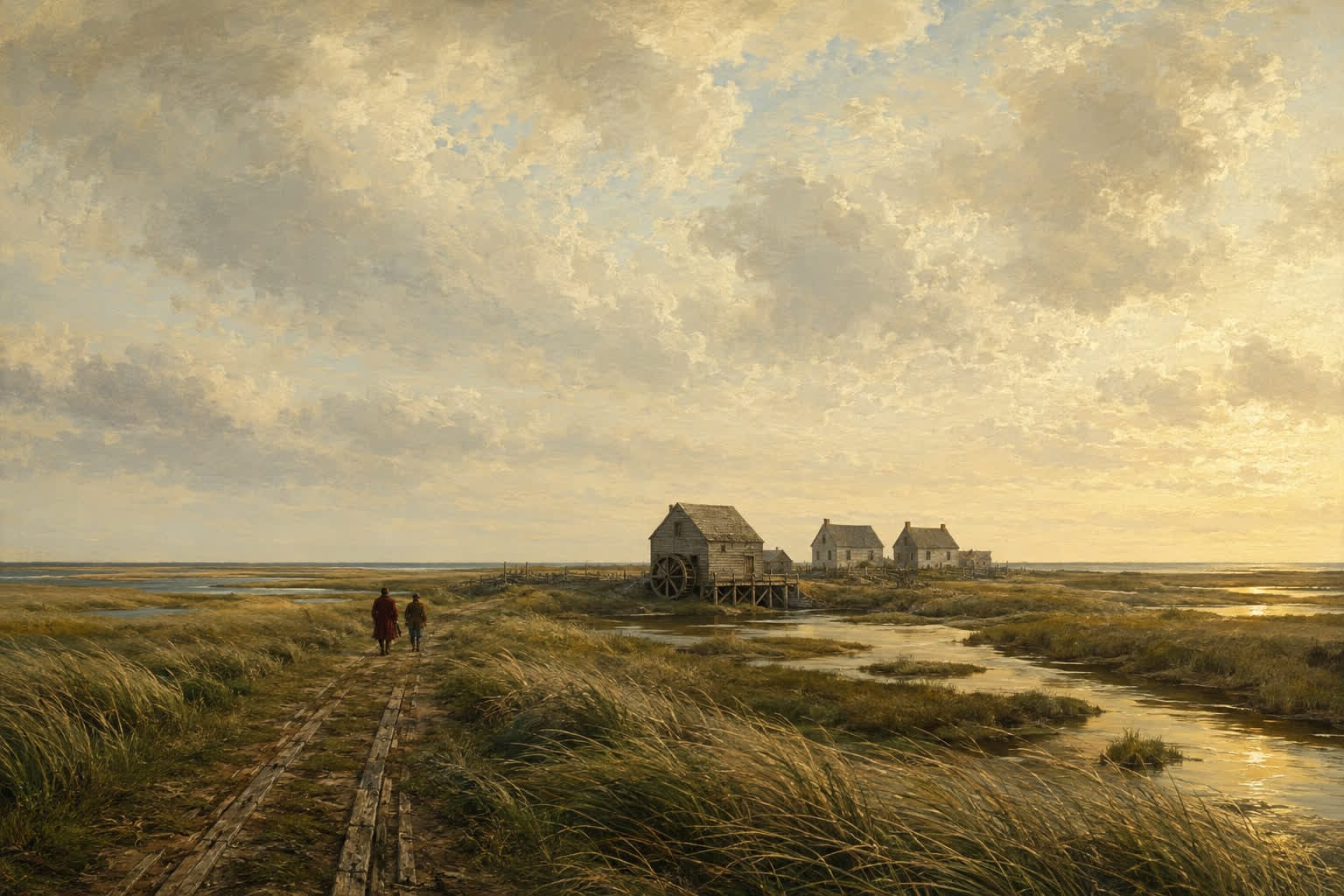
Why a colony of mountain farmers went down to the salt meadows for eleven years, no record says, and the reader should distrust any account that knows. What the record does preserve is who received them at the shore: "A man by the name of Weair, the founder of Waretown, is one of their Society." Abraham Waeir built the mills, stayed when the company left, and the town on the Barnegat shore wears his name to this day — Waretown, a Rogerene surname sanded smooth. Keep that pattern in mind. It is about to repeat.
The gap that is not ours
Forty miles north of Schooley's Mountain, in Sussex County, a pass cuts through the Kittatinny ridge on the old Minisink trail — the Lenape's ancient spring route down to the shore oyster beds, which threaded the gap ages before any European named it. An 1872 county directory describes it so: "Collver's Gap, a beautiful pass through these mountains, is situated between Long and Collver's Ponds, on the stage road from Branchville to Port Jervis."
Collver's — the family's own double L, in county print, on a ridgeline and a pond, a decade after Appomattox. Later map-makers sanded it, as they sanded everything, and the modern map says Culvers Gap and Culver Lake.
Here is where I must be sterner with my own name than the compilers were. It would be the easiest thing in the world to gather the gap into this story — the Colverite colony spreading its name across the hills, Lake Rogerene to the south, Collver's Gap to the north, one family's church written twice on the landscape. Easy, tidy, and wrong. The Colverite migration never came within forty miles of that ridge. The name on the gap belongs to a different chapter and a different man: Rev. Jabez Collver — the "Jabsh" of the 1732 will, grown into a Presbyterian pulpit — who in 1774 bought 163.98 acres "on the East side of the Minisink Mountain at the North East end of the great pond," beside the water that took his name. How the orphan of Black River came to own the lake under the mountain is a story for its own post; the point today is smaller and harder. Two colonies got compressed into one; a gap forty miles away gets annexed by the same instinct. The instinct is love, mostly. It is still the enemy of the record.
If this project has one working rule, it is this: a name on the land is a lead, not a conclusion. Waretown really is the Waeirs'. Lake Rogerene really is the sect's. And Culvers Gap really is a Collver's — just not the ones the books assumed, and the deed, not the map, is what says so.
What the land kept
The Colverites built almost nothing a settled church builds. No meeting-house deed has been found, no pew list, no baptismal register, no salaried minister's book — which is consistent with everything the sect believed about hirelings and consecrated buildings, though an absent deed can also mean a lost one, and I hold the creed and the silence a little apart. A church that owns no building cannot lose one.
They very nearly slipped the record on that account. What they could not help leaving was themselves — in a word the neighbors coined because the family filled its own church; in a row of deeds bought in proclamation money with the receipts endorsed the same day; and in the one register no sect can decline to sign, which is the land. Mountain Pond answers to Lake Rogerene. Waretown keeps the Waeirs. A gap and two ponds in Sussex County carried the double L for a century before the maps wore it down.
The sect is nearly gone — a scholar who went looking in the 1940s found the remnant still gathering on a hill above Mystic, and could report of New Jersey only that "there is still a Lake Rogerene." There still is. I have come to think of that lake as the family's quietest monument: a congregation that refused every book the establishment kept, remembered by water that never kept one either.
---
Sources and notes: The migration accounts compared are R. R. Hinman, A Catalogue of the Names of the First Puritan Settlers of the Colony of Connecticut (1852); J. G. Rosenberger, Rogerenes in New Jersey (1922); John Rogers Bolles and Anna B. Williams, The Rogerenes (Boston, 1904); Theodore F. Chambers, The Early Germans of New Jersey (1895), 297; and Donald Lines Jacobus and Ralph D. Wood, "Additions and Corrections to the Colver-Culver Genealogy,"* The American Genealogist 31 (1955): 129–54. The 1732 will of John Colver of Black River is abstracted in the Calendar of New Jersey Wills II (1918), 105, with the inventory's "beaver hat, felt hat and Bible"; the guardianships are in the New London probate records. The two-colonies distinction, the "Colverites" sentence, the Mountain Pond grove and its furniture, and the Monmouth chronology are Henry C. Pitney, ed., A History of Morris County, New Jersey (1914) — a reconstruction from local recollection, flagged as such throughout. The Barnegat and Schooley's Mountain conveyances, including Robert Collver's deed of 22 December 1748 (West Jersey Deeds, Liber O, fol. 238) and Nathan Collver's same-day exchange of 4 September 1750, are in the New Jersey State Archives, Trenton. Waretown's founding by Abraham Waeir is in Bolles and Williams and local history. "Collver's Gap" is Edward A. Webb, The Historical Directory of Sussex County, N.J. *(1872); the Minisink trail through the gap is Pitney; Rev. Jabez Collver's 1774 purchase at the great pond is from the Sussex County conveyances. The Lake Rogerene remnant is Anna Brinton's 1943 study of the sect.
Adapted from the forthcoming book — We Are Doves: Four Centuries of the Collver–Culver Family.
© 2026 Albert B. Collver III · The Collver Family History Project. Original historical documents reproduced here are in the public domain; the research, text, and annotations are the author's. Please cite or link rather than republish.