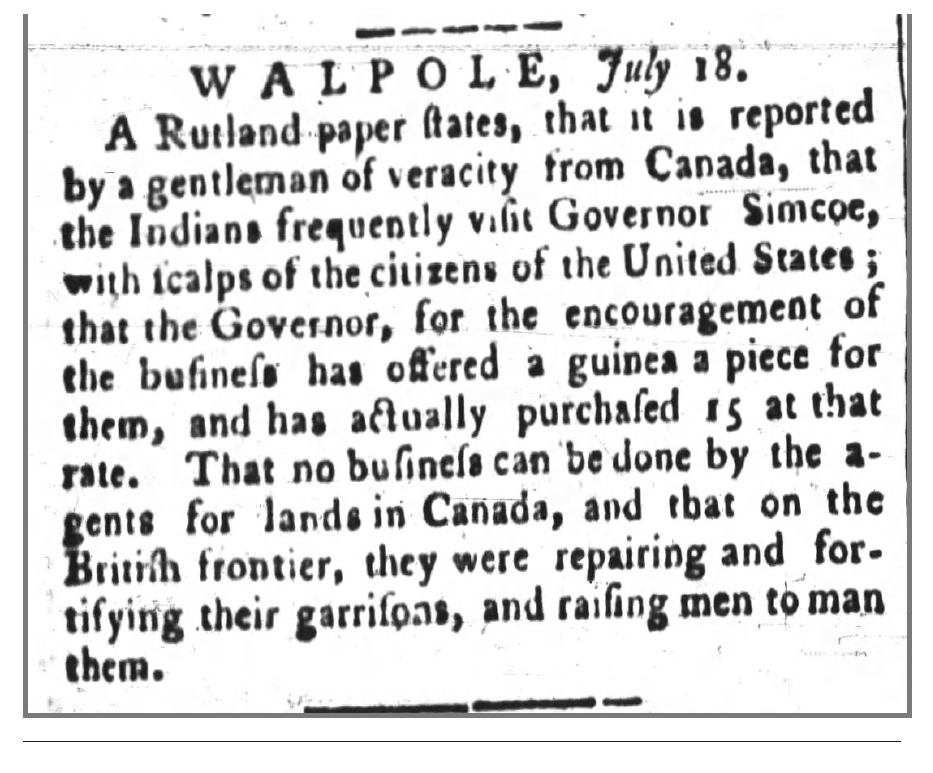
The Scalps That Never Were
My grandparents came home from Simcoe with a story that the Collvers had once scalped people. The story is real. It began in a Vermont newspaper in July 1794, and it was never about us.
My grandparents came home from Simcoe with a story that the Collvers had once scalped people. The story is real. It began in a Vermont newspaper in July 1794, and it was never about us.
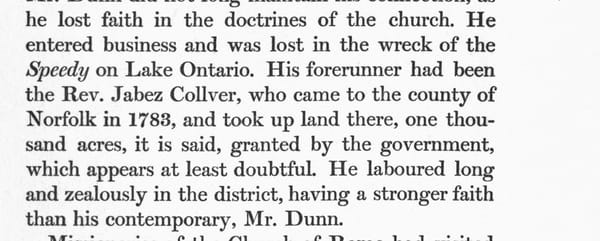
Between 1905 and 1914 three of Canada's national reference works made room for the Reverend Jabez Collver. Each paid him an honor, and each made a small mistake. The documents had already answered every one of them.
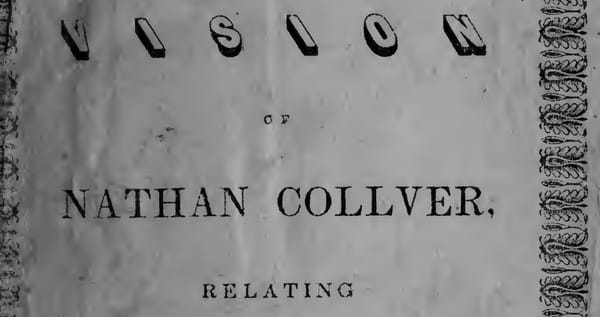
About 1790 a young man who doubted heaven and hell asked God to show him whether they were there. His father wrote down what he said he saw, and the family kept it in print for more than fifty years. Also: the first printed proofs of We Are Doves have arrived.
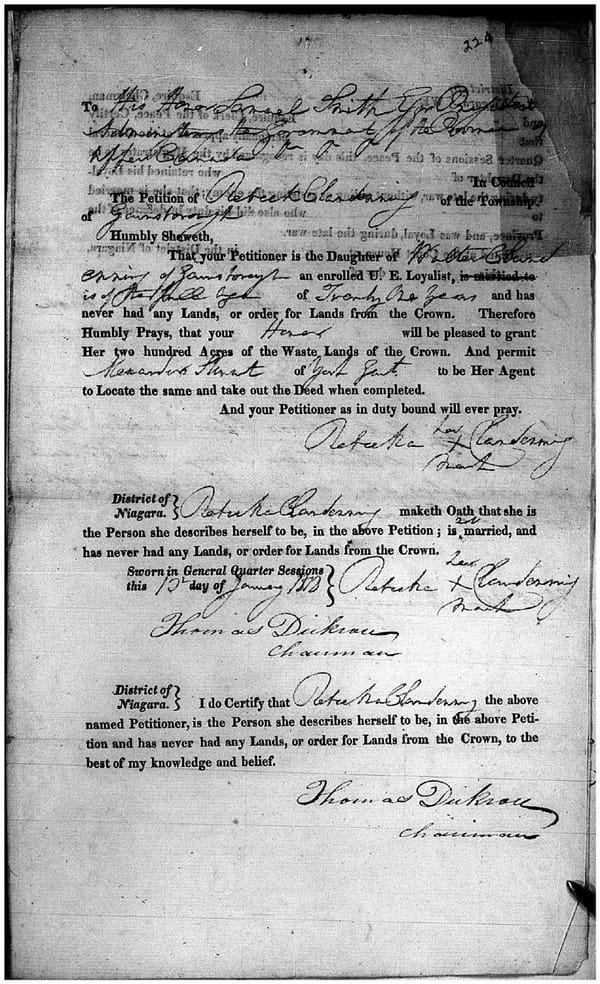
The family remembered Jane Cregar's great-great-grandmother only as Rebecca. The Crown's own paper gives her surname back: a Loyalist's daughter's petition of 1819, the patent of her lot, and the 1838 sale by William Shingler and Rebecca his wife.
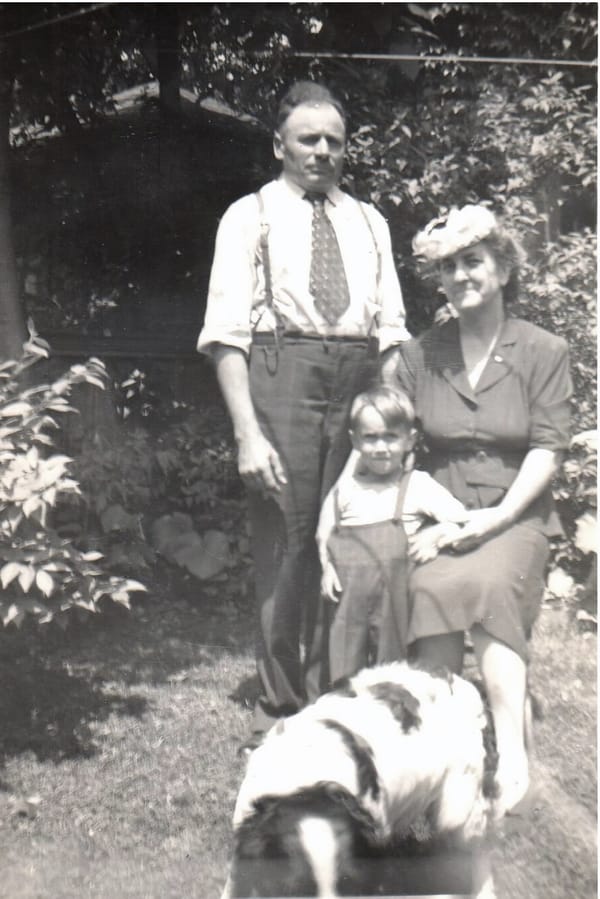
In 1958 a Michigan widow sailed home to England on the Queen Elizabeth. The records give her back a Yorkshire village, two forgotten weddings (father and son to mother and daughter), a grandmother who signed her name in 1818, and an English cousin found by DNA.
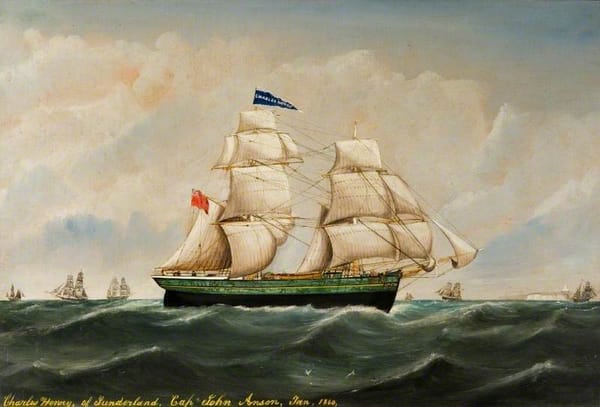
A Hartlepool gravestone remembers Henry Anderson, master mariner, who died at sea in 1839; his son and namesake died at sea in 1865. The records a seaman's death leaves behind give the father a ship and a birthplace: Lerwick, in Shetland.
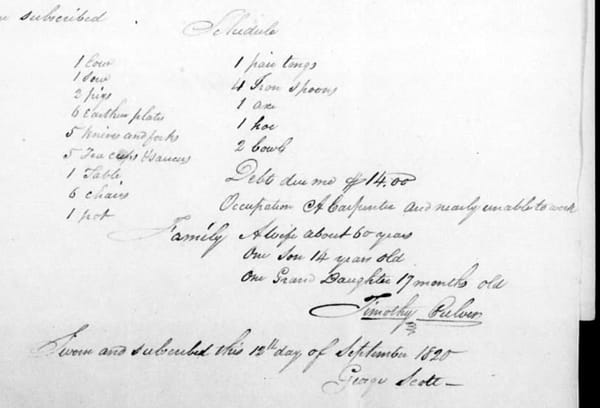
Sergeant Timothy Culver of the Connecticut Line, the Patriot cousin, read from his own pension file: four enlistments, a leg hurt hauling timber in 1781, and the 1820 schedule that lists every one of his six chairs.
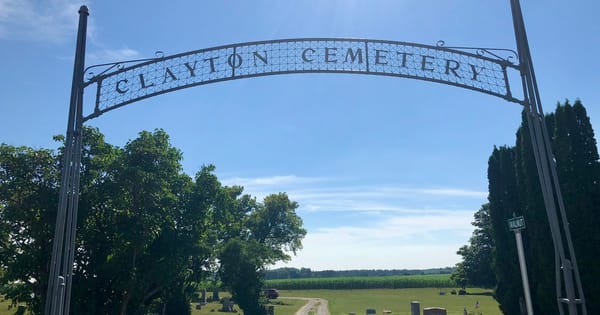
The direct line left Norfolk for the Saginaw Bay country in 1887. Why that county and not Dakota or Oregon? A wedding in 1858, four brothers in Bay City, and a grave the printed genealogy put in the wrong country.
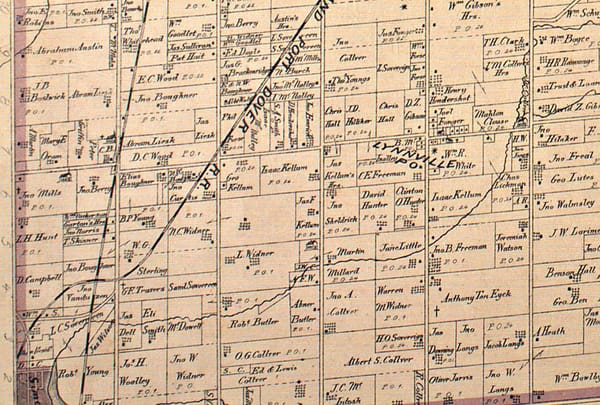
In 1877 a county atlas lettered forty-one of us across Norfolk. Read beside the land registry, it shows what three generations made of a thousand acres, and why one son left.
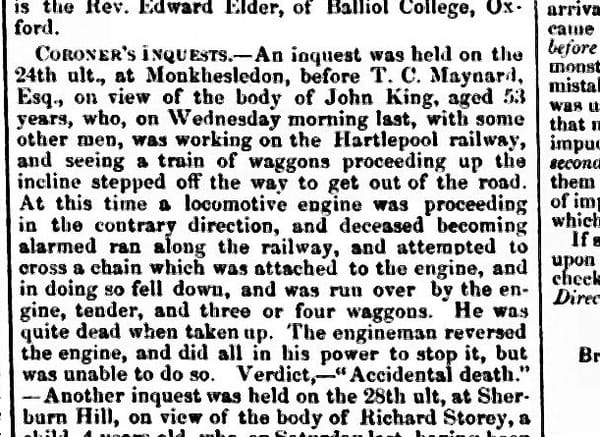
On 23 October 1844 a railway plate layer named John King was run over on the Hartlepool line. The family had forgotten him; a coroner's inquest, two death registrations that disagree, and one word in a burial register brought him back.
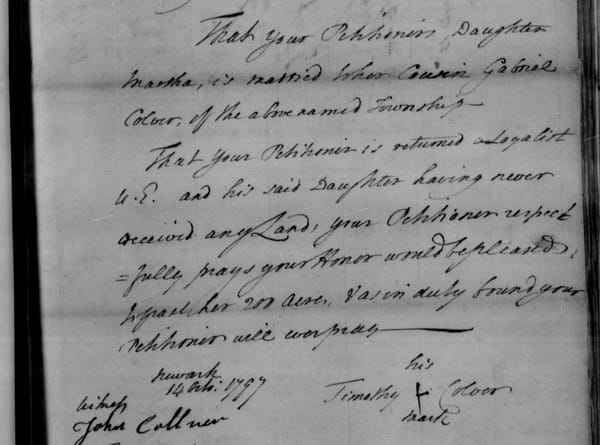
Four brothers married four sisters, all of the same name. The land office of Upper Canada paid the dowries.
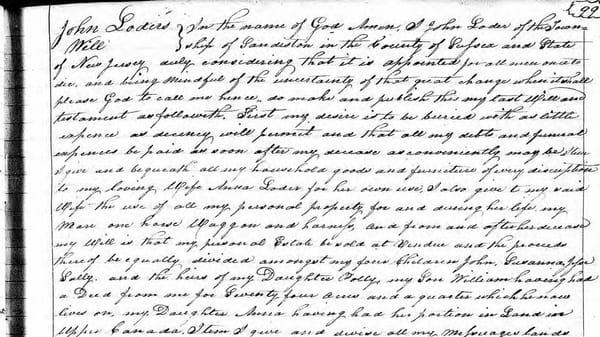
An 1831 will, a 1940 typescript, and a reader's letter find the daughter the family register lost.
Family History
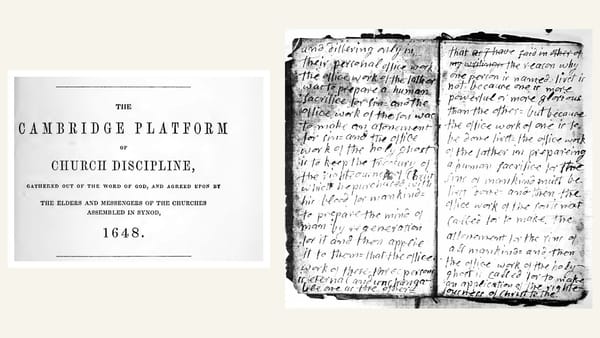
An orphan of the persecuted Rogerene sect chose his own guardian at sixteen, took orders under the Cambridge Platform, and spent nearly thirty years as the kind of salaried minister his family had heckled.
Family History
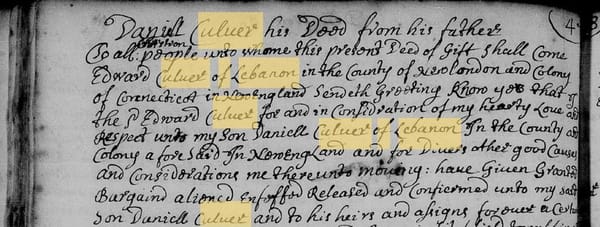
In early September a comment arrived on one of this blog's Facebook posts, from a descendant of a Louisiana blacksmith's line, asking a question this project hears in many forms: can my Culvers be traced to yours? The family had done its work — they had a
Family History
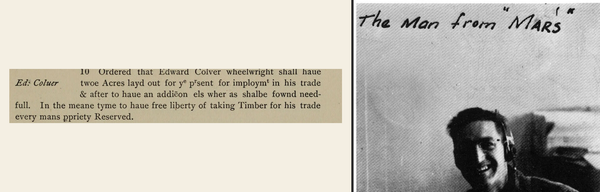
Run a finger down the records asking what they did for a living: bread, beer, wheels, shoes, land, flour, cheese, shirts, and the telephone — three centuries of the licensed trade a town cannot do without.
Family History
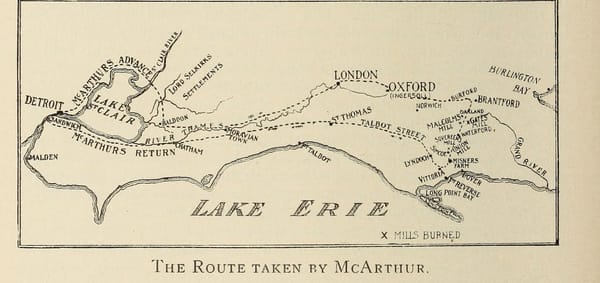
In the first days of November, 1814, on a hilltop above Waterford in Norfolk County, Upper Canada, two middle-aged millers stood under a great oak with a rope over its limb. The rope was already around the neck of one of them. Around them sat a column of mounted
Family History
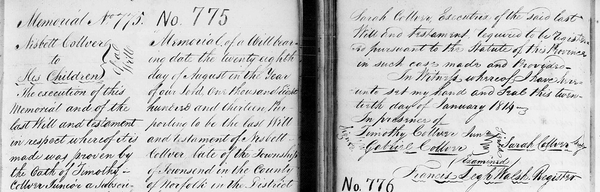
On the twenty-eighth of August, 1813, in the second summer of the war, Captain Nesbitt Collver of Townsend township sat down and made his will. Listen to this post 0:0015:20 ▶ Listen to this post read aloud (MP3, 15 min) Subscribe:Apple PodcastsSpotifyAmazon MusicMore apps He was thirty-
Family History
Vanita Johnson Engelbrecht died in the small hours between Saturday and Sunday, the twenty-ninth and thirtieth of August. She was my father's eighth cousin — the two of them the same number of generations down from a couple who lie in unmarked ground on a New Jersey mountainside
Family History
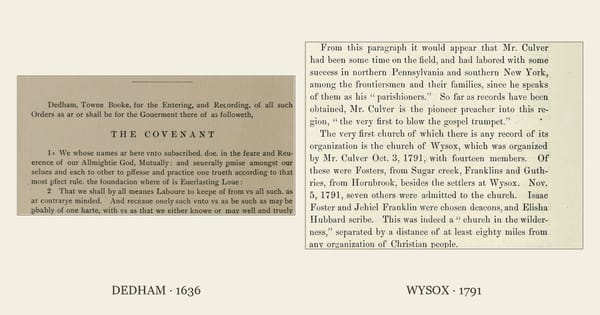
In 1636 a wheelwright signed a covenant at Dedham, sixty-eighth on the roll. In 1791 his great-great-grandson organized a covenanted church in the Pennsylvania wilderness. One hundred fifty-five years, one revolution, one sedition conviction — and the same instrument, signed twice.
Family History
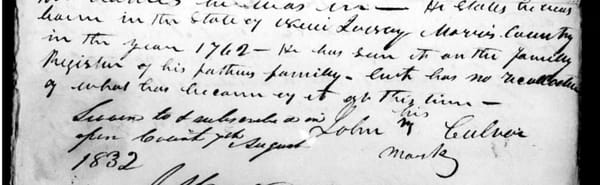
In 1832 an old soldier swore he had seen his birth on the family register of his father's family — and could not say what had become of it. On the registers this family lost, refused, and should not have trusted.
Family History
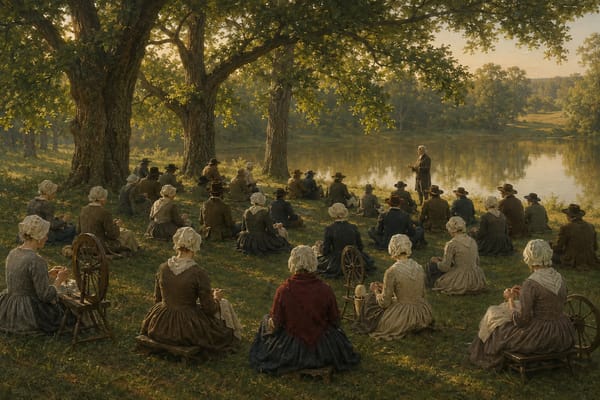
There is a small lake in Mount Arlington, New Jersey, that the modern map calls Lake Rogerene. Listen to this post 0:0018:42 ▶ Listen to this post read aloud (MP3, 19 min) ▶ Listen to this episode Subscribe:Apple PodcastsSpotifyAmazon MusicMore apps Almost nobody who drives past it could tell
Family History
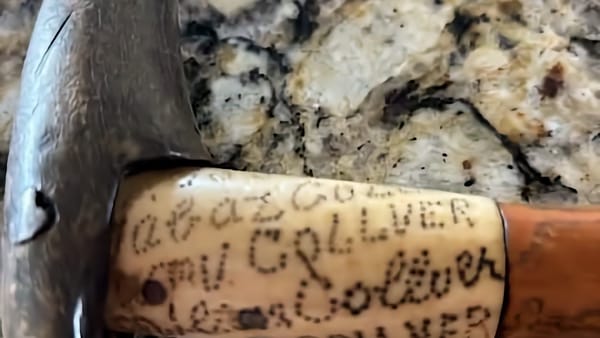
The oldest thing this family owns that you can still pick up is a walking stick, and it corrected me.
genealogy
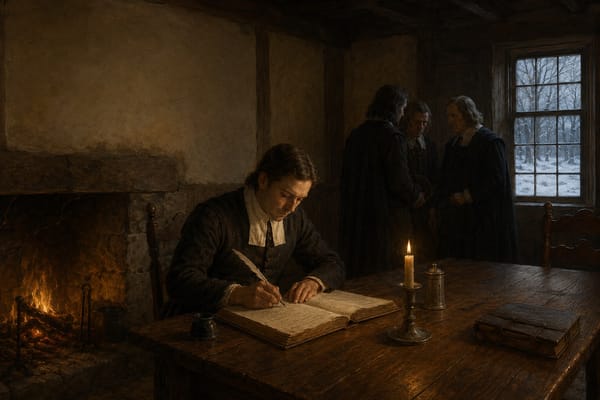
In March of 1676 — March 1675/6 by the reckoning then in use, when the year turned in late March and a winter month carried two dates — the Council of Connecticut sat at Hartford answering letters from a colony on fire. King Philip's War had burned through the
Family History
In 1857 the office of the Norfolk Messenger, the newspaper at Simcoe, printed a slim pamphlet with an immodest scope and a modest author. The scope was everything: A Sketch of the County of Norfolk, Canada West — Canada West being what Ontario was called between 1841 and Confederation — undertook to